When I first began leaning into AI, I was doing what most people probably do, which is hit a web page, type a prompt or question, and wait for an answer. But then in November, we heard the skittering of crustations from behind our browsers. An opportunity for users to take their queries offline, to a desktop. To a local app that saves all of your context, every conversation, and all of your project work on your own desktop. Without letting your queries sit in a browser to be scraped by extensions you accidentally gave access to last month.
When I began my journey with OpenClaw in January, my first night of exciting effort brought me to a rather large bill the next morning. I detailed a few highlights of that experience here, in my other article Agent Model Selection Options. In my original article, I was jokingly writing about the "grief" I felt when I found out how expensive it was to configure an AI Agent Harness, which is what we now call desktop agent tools like OpenClaw, Hermes, Claude Code, or even Cursor. While the article was a bit of a tongue in cheek perspective, the impact to my wallet was no joke.
So in early February, I began playing with another product called Base44. The morning after playing with OpenClaw, I realized that just getting my harness configured to work the way I wanted had cost me almost $250. I also made a mistake in the process. When OpenClaw first came out, you could use an OAUTH account with it. So, I subscribed to Anthropic, in hopes of using it with OpenClaw. Then Anthropic banned it. Discovered that one day too late and had to buy another $50 in tokens to finish setting up OpenClaw.
Without even using OpenClaw for anything besides configuring itself, I had blown $250! I was a bit annoyed in reality. At that point, I stepped away from OpenClaw completely, just because I was so aggravated. I also was quite angry at Anthropic as well. I felt I had spent this money and had the rug pulled out from under me after the spend. Thankfully I don't feel this way anymore. I have learned how to get real value out of my Anthropic subscription, and I found Hermes and Cursor, which make me feel a lot better about using a harness than my initial OpenClaw experience. I may or may not go back to OpenClaw in the future, but nothing compelling right now.
The reason for this article
If you have made it this far in the article, thanks for sticking with me. It was a bit of venting for the initial motivation behind my first actual app that I built. While I was playing around with the early harnesses that I have learned in the past eight months, I came across Base44. This was recommended to me by Grok, when I was asking for a tool that I could use to create a web UI for my personal dashboard.
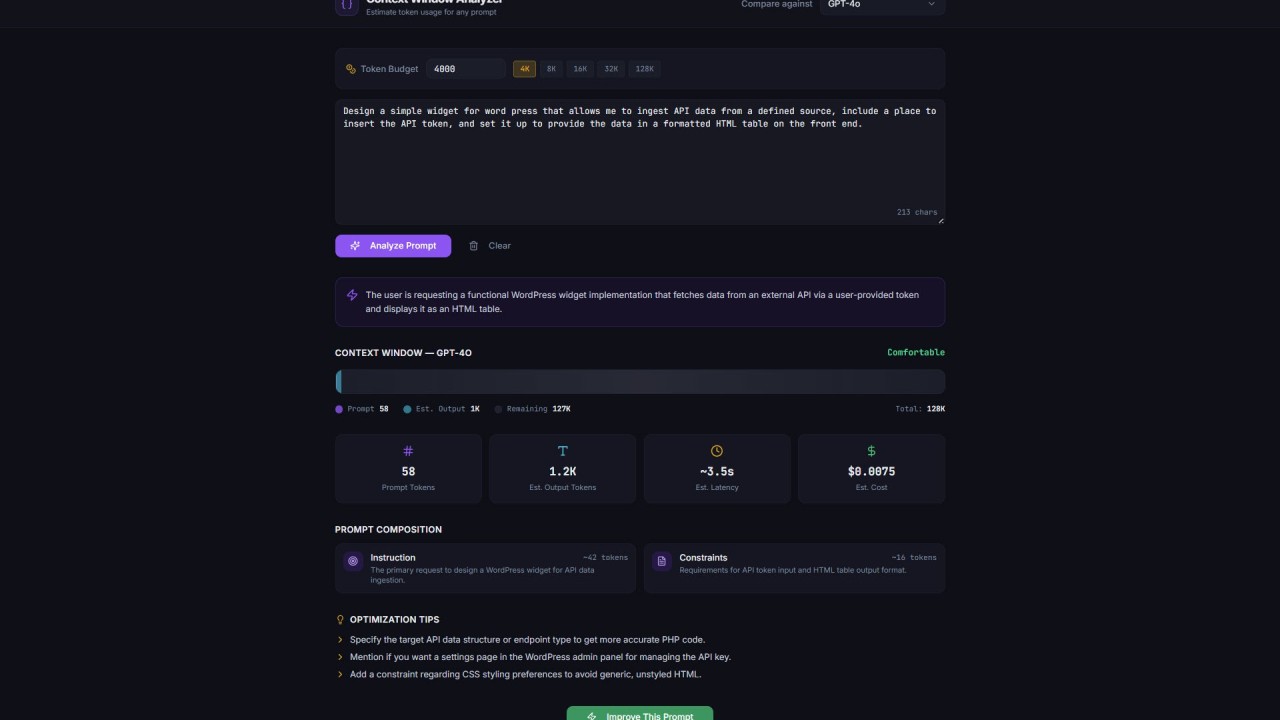
I wanted something that would help me budget the use of tokens with my AI prompts. I created my first app here called "Context Window Analyzer" I also call it "Scope Lens" because the purpose is to take a prompt, analyze it before I put it into an AI, so that I can make the prompt as efficient as possible. I wanted to stop burning tokens unnecessarily.
While I published this app, I have taken it down because aside from me experimenting with it, anyone else using it will cost me money, unless I set up a subscription option. The screen shot at the top of this article is the initial effort, I have found alternative strategies since then, but the idea was solid.
So much so that I was not surprised to see Nate Jones coming out with a better strategy in a video in the past few days! His video is a deep dive on this idea. "Paste This Into Claude, Never Hit a Token Limit Again" I did my first effort in this using the "Scope Lens" tool, but I took it a bit further as well.
Templates that interview you
The other method I have been using is to develop a set of templates that interview you before beginning a project. This initial template is one that I built to help me create a design specification for any project I begin. This way, I get to review the entire project scope before I begin a "vibe coding" process, that is often very token heavy.
This first template is one that I have used two times now for other projects I am building. I open it in Claude Code and turn on the "Voice Mode".
When you are in Claude code, turn on Voice Mode, and drag and drop my template in, it will go into an in-depth interview of you to build an initial specification document for your design template. A proper specification document will provide enough context and guidance for your agent to fully scope out, design, and then build an application for you. It is a starting point, you will ultimately refine things, but it is a starting point with two feet on the ground up front.
Give the template a try if you are considering building products for the first time. It will help you, educate you on the process, and follow a standards-based process to build your first app. If you choose to buy access to this template, I will be maintaining it over time. You will get free updates for life, and can provide feedback if you have suggestions.
Purchase the template here if you are interested.
Give it a try and leave your comments here if you found either the Scope Lense or this template useful.