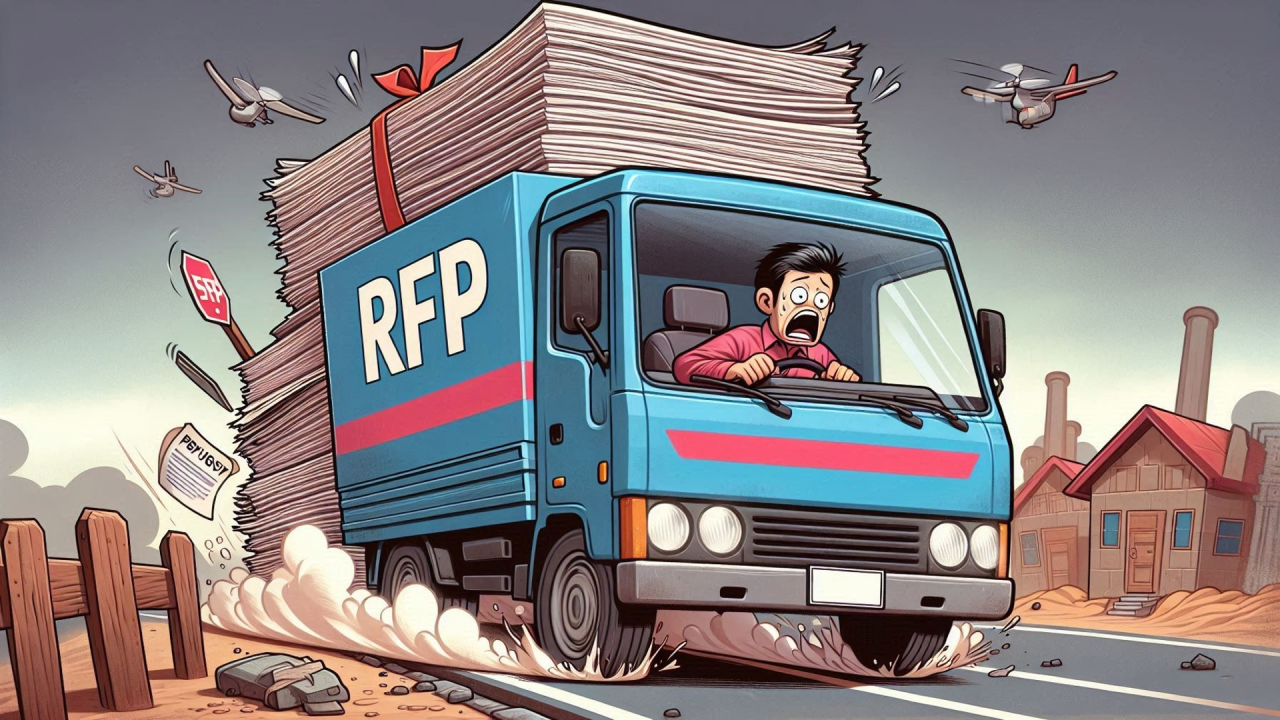
This is the first article in a series that will handle a number of skills that sales professionals need to know, but are often overlooked in training, processes, or documentation.
The upcoming articles are going to be expanded drafts from some of my earlier work that go deeper into specific nuances of various sales processes. The first few weeks will be focused on RFPs and Proposals. The series will move into technical sales techniques, including presentations, demos, pre-sales technical skills, trade show skills, and a few occasionally forgotten sales skills.
With that, let's move onto the first few topics.
RFPs, The beginnings of stress
One of the most stressful things a business faces is being invited to respond to an RFP. The process can be long, convoluted, and difficult if you have never done it before. Inside of the core ask of "Send me a Proposal" are many elements that don't seem like a big deal at first but can mean the difference between winning your one and only bid for a year or making a quarterly number. Leaving it to chance is the last thing you want to do if you want to win.
When a typical manual bidding effort runs anywhere from 8 to 20 hours (for a smallish bid) of effort for multiple team members, efficiency is key. Efficiencies come from processes. If it is your first time through an RFP, you may struggle with a number of common issues. The stress factor that kicks in during any given RFP is real and significant.
Part Time Proposal Manager
If you are a salesperson, this is only ONE part of the processes that make up your larger job. You personally may only engage on one or two RFPs per year. Remembering where everything is stored, where to save documents, how to engage, who to ask for help from on your team can easily be forgotten between bids. Asking your sales manager doesn't always help either. They have a whole different discipline of management and forecasting which doesn't include how to bid that rare RFP.
This means that every RFP is like a first RFP for many. Anything you do only occasionally, is going to be challenging. Knowing that it is only a part of your job, and maybe in a past company it was a proposal manager's job makes it that much harder. So, when things are so easily forgotten, and processes are not documented you need to have a starting point.
What should you do?
There are a number of ways to handle responding to RFPs and writing Proposals. Depending on the size of your company, the budget limitations, and the type of business you will have multiple options. You may have to choose from a minimalistic approach. If you are lucky, you may have a large, dedicated team. Larger companies that have budget for a full proposal team may have multiple staff using a variety of tools to accomplish delivering exceptionally polished proposals and RFP responses. But smaller organizations will need to have other ways to handle these business processes. This is what this article is about.
The small-scale manual proposal process
The basic tasks you need to be aware of in an RFP response or proposal development is to first understand that you need to have two drafts of everything. In a perfect world, your proposal team will handle this, but since you may not have a proposal team, where do you start?
Step one - Kicking Off Your Proposal
The very first thing you need to know is that the longer you wait to start the process, the more difficult it is going to be to bring it all together for delivery. There are so many facets in a typical RFP to understand that if you have no experience in this, you need to start by enlisting help. The minute you are aware of an RFP coming your way, ideally BEFORE you get the documents, let your manager know it is coming. If your manager has a bit of experience, pulling together resources may be well known. But it is crucial you understand that you cannot wait even an hour to get this ball rolling.