The Trouble with Just Throwing Money at It
First off, corruption and fraud are real. We’ve already watched it play out in Minnesota, California, New York — pretty much anywhere money flows without tight controls. People are people; if there’s a way to game the system, somebody’s going to do it. It’s the same instinct that makes most of us look for ways to pay less in taxes or stash a little extra for tough times or family. That’s not evil — it’s human. But when you scale it to a national UBI program run by government, political parties start treating it like a football. One side proposes, the other knocks it down just because. Right-wing, left-wing, doesn’t matter; the game stays the same.
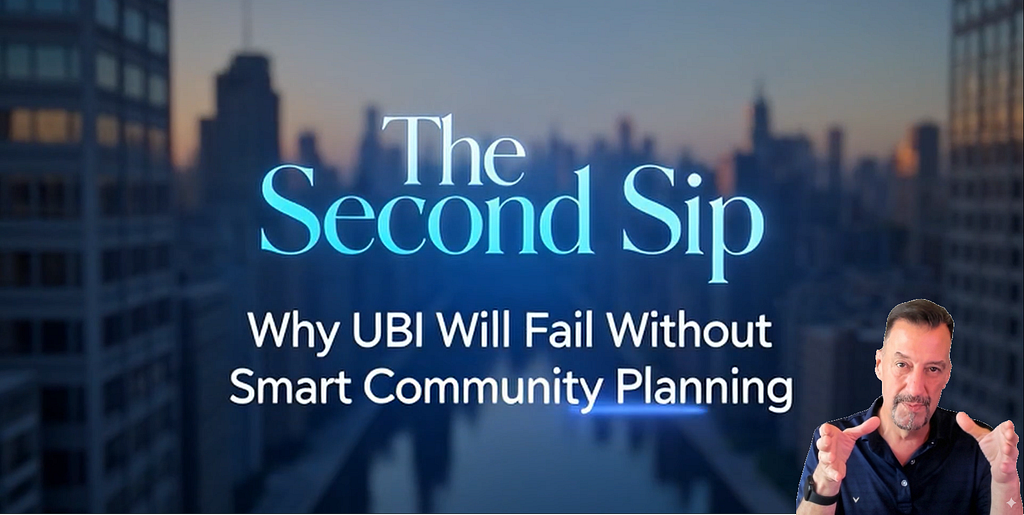
And even if the checks keep coming, what happens on the ground? Gentrification. You flood a neighborhood with cash and suddenly developers, landlords, and speculators smell opportunity. The people the money was meant for get priced out anyway. The background I used when I created the video was the old World’s Fair grounds a place they built in the ’60s to show us this shiny future. It is still there, but abandoned. We got some of that future, sure. But we also got the parts nobody planned for, and just like the World’s Fair grounds, projects get abandoned over time.
Lessons from Company Towns and Why They Die
I started digging into “engineered urban planning” because I wanted to look at this from a first principles perspective. Build it right when the ground is empty and you don’t have to tear anything down later. But history shows even the best intentions can go sideways.
Think about the old company towns — oil, mining, you name it. They built housing, stores, schools, everything to lure workers to the middle of nowhere. Starbase in Boca Chica, Texas, is basically doing the same thing right now: neighborhoods, shopping, services all tied to SpaceX. As long as the rockets keep flying, it could last. But what happens in fifty or a hundred years if the industry changes? We’ve seen it before. Nuclear test cities in Arizona and Nevada. Military bases that close — like Fort Devens in Massachusetts that turned into a prison. Midwest towns that dried up when the factory or mine shut down. Without something bigger holding the community together, it just fades.
What Government Housing Projects Get Wrong
The big federal attempts in the U.S. back in 1937 and 1949 are textbook examples. They tore down slums, built high-rises like Robert Taylor Homes in Chicago, and called it urban renewal. Problem was, they concentrated poverty without jobs, services, or even eyes on the street. They actually destroyed over a hundred thousand homes from the slums, and replaced it with about forty thousand homes in the high rises. That pushed those displaced into other poverty stricken areas. Crime exploded because the design made it easy to ignore what was happening at ground level. And here’s the killer: they funded the build but put zero money in the budget for maintenance. Elevators, plumbing, roofs — everything crumbled.
The same story played out in China with their real-estate boom fifty years later. Ghost cities everywhere. GDP looked great while they were pouring concrete, but nobody budgeted for upkeep or oversight. Developers overbuilt and violated codes everywhere, buyers were left with empty apartments they couldn’t sell, and eventually the government had to step in with the “three red lines” crackdown.
The human cost was brutal. In the U.S. it hit Black and Hispanic communities hardest first. Welfare checks kept people alive in those towers but gave them no path up — no jobs, no education, no hope. China’s youth are saying the same thing now: “I’m supposed to slave away so the last generation can retire?” We shipped our manufacturing overseas, replaced one kind of bondage with another, and now AI is coming for the white-collar jobs too. If we don’t plan better, we’re just building tomorrow’s slums.
What Actually Works: Models That Have Lasted
Not everything failed. The Amish villages in Lancaster, Pennsylvania, have been going strong for almost three hundred years. They designed their world around walkable communities, horse-and-buggy (no insurance, no licenses), barn-raising, mutual community loans, and tight social ties. It’s not government communism; it’s religious community. They’ve fought legal battles to protect it and it works.
Look at the 55-and-over planned communities in Florida, Arizona, Texas, South Carolina. They use community land trusts so residents own the house but the land stays with the trust — keeps taxes and costs low forever. Same idea behind Georgism, named after Henry George: tax only the unimproved land value, not the buildings. Keeps housing affordable even if you’re living on a fixed income.
Then there’s Barcelona’s superblocks — nine-by-nine grids where they turned the insides into car-free, walkable plazas. The idea actually dates back to the 1930s, long before climate change or COVID. They slowed traffic, leveled sidewalks for bikes and wheelchairs, and created real neighborhood life. Paris, Melbourne, Cleveland — they’ve all tried versions of this. The Dutch bike cities prove you don’t need a car culture everywhere. When robo-taxis eventually cost fifty cents a mile, owning a car in a dense, walkable spot stops making sense anyway.
The Real Enemy: Gentrification and How to Stop It
Every time one of these places gets nice — Brooklyn, parts of the Bronx, Barcelona’s new superblocks — rents spike and the original residents get pushed out. That’s the cycle. The fix isn’t keeping rich people out; it’s keeping the neighborhood mixed by income on purpose. You want the millionaires living there because they start businesses and employ everybody else. You want the house on the hill that inspires the kid down the block to think, “I could do that.” But you also need rules — zoning, land trusts, Georgism-style taxes — so the poor don’t get priced out and the rich don’t turn the whole place into their private enclave.
My Proposal: Build the Communities First, Around AI Itself
Here’s what I keep coming back to. If we’re serious about UBI in an AI world, we stop treating it like a check in the mail and start treating it like a community-building project. When tech companies put up the next data center or grid upgrade, make them build the neighborhood around it. Mixed-use zoning from day one. Community land trusts. Georgism tax structure baked in. Walkable, bikeable, robo-taxi friendly. Income diversity built in so the place doesn’t stratify. Protections written so no future politician or failed company can kill it.
Do it right and these communities become infectious. One successful Starbase-style town becomes the template for the next. We loosen the regulatory stranglehold that stops anything from getting built, use first-principles engineering instead of patching old mistakes, and replace what we tear down so nobody gets displaced without a better place to go, like the “projects” mentioned earlier.
Looking Forward
I don’t claim to have the perfect blueprint. I’m just a guy thinking out loud, looking at a sixty-year-old World’s Fair site that was supposed to show us the future. Some of it worked. A lot of it didn’t. But we have the examples now — brilliant failures and quiet successes — that show what’s possible when we plan with integrity and protect what we build.
AI is coming whether we like it or not. The people talking about UBI are right that something has to change. But if we don’t build the communities first — communities that can last hundreds of years, that cannot be wiped out during the next budget cut or political swing — we’re just trading today’s middle class for tomorrow’s new poor. Let’s do this the smart way. Let’s give people a place where they can hold their heads up, feel part of something real, and actually look forward to whatever comes next.
If this sparks any thoughts for you — urban planners, policymakers, tech folks building the future — drop a comment. I’d love to hear what you’re seeing. And if you want more of these deep dives, hit that thumbs-up. Until next time, I bid you adieu. Have a great day.